The Complete Property Owner’s Handbook on Furnace Replacement in 2026
Committing to a highly efficient heating unit is one of the most valuable improvements you can make to your residence’s indoor climate, peace of mind, and energy efficiency. That being said, a flawless installation process is as essential as the quality of the unit itself. Applying industry best practices during installation enhances heating efficiency, slashes monthly utility bills, and shields your home from deadly risks like gas leaks.
24 Hour Furnace Installation Technician in Orefield Pennsylvania
Whenever furnaces are incorrectly sized, inadequately checked, or installed incorrectly, they can rapidly transform from a comforting appliance into a serious safety hazard leading to electrical fires or fatal carbon monoxide leaks. Whether you are upgrading an old system in a vintage home or equipping a new construction, this in-depth post explores every critical phase of the furnace installation process so you know what lies ahead.
1. Repair vs. Replacement: Making the Right Call
Prior to scheduling a full furnace installation, it is crucial to evaluate whether your existing system is at the end of its life. Heating systems do not operate indefinitely, but identifying the exact right time to replace can keep money in your pocket in costly fixes and power loss.
You should strongly consider a full furnace replacement if you notice the following warning signs:
- Equipment Age: The typical duration of a home heating system is generally 15 to 20 years. If your system falls within or is past this timeframe, its internal hardware and heat exchangers are probably failing.
- Higher Power Bills: If your gas or electric bills are creeping up despite keeping the thermostat the same, your furnace is wasting energy and straining to keep your home warm.
- Frequent Breakdowns: When the total expense of multiple fixes on an outdated system begins to approach or exceed the price of a replacement, replacement is the most financially sound choice.
- Imminent Safety Hazards: Strange smells, unusual vibrations, and worries about a gas leak means you should immediately call a licensed professional. Dangerous symptoms often dictate an urgent swap to avoid carbon monoxide poisoning.
2. Selecting the Perfect Heating System for Your Property
Furnaces vary wildly in quality. Modern heating technology has advanced significantly, offering homeowners total command over their home environment and utility usage.
Understanding AFUE Ratings
Heating efficiency is determined by the AFUE rating. A higher AFUE percentage means that a larger portion of the gas or electric your furnace consumes is successfully converted into warm air for your home rather than being wasted up the chimney.
- Cheaper Heating: Top-tier heating units burn less gas to keep you warm. This translates to substantial financial savings over the unit’s lifespan, which is very obvious in regions that suffer from harsh, prolonged winters.
- Environmental Benefits: Choosing a high-efficiency furnace with a 90+ AFUE score typically emits far less carbon, contributing to a greener home and promoting a cleaner environment.
Best Heating Manufacturers for 2026
When planning a furnace installation, selecting a reliable manufacturer is essential. Looking at consumer reviews and durability, here are some of the best choices:
3. Before the Install: Setting the Stage
A successful furnace installation begins weeks before the furnace is delivered. Proper preparation ensures that the installation happens without a hitch and that the new system operates at peak performance from the first time you turn it on.
Placement and Sizing
Load calculation is incredibly important in home furnace installation. A unit that is too small will operate 24/7 without properly heating your home, while a unit that is oversized will short-cycle, leading to massive temperature fluctuations, bad air quality, and broken parts.
You must also find the ideal area for the new unit to ensure proper airflow. Typically, furnaces are housed inside a basement, dedicated utility closet, or garage. When selecting the spot, think about how close it is to fuel pipes, power sources, and your home’s core ductwork. The space must be entirely free of clutter and obstructions to guarantee sufficient clearance for future servicing and to stop dangerous accidents.
24 Hour Furnace Installation Technician in Orefield Pennsylvania 18069
Electrical Requirements
New HVAC systems demand a standalone power line that is isolated from your home’s other electrical systems. Before beginning the physical installation, an HVAC technician or contractor must ensure your home’s wiring and switches are modernized and in safe shape.
- Considerations for Older Homes: Installing a new, high-tech furnace in an aging home often requires panel upgrades to provide adequate, stable power. Outdated systems can short out that may ruin a new furnace’s motherboard.
Dealing with City Codes
Ignoring city permits can result in hefty tickets or legal complications when it comes time to sell your home. A vital first move is to pull the right permits prior to beginning the home furnace installation. Following local building codes, brand guidelines, and overarching safety standards like the NFPA and IRC keeps you safe and ensures the legal and safe operation of heating systems.
4. The Complete Installation Day Timeline
Knowing what takes place on setup day gives you confidence to interrogate the crew and ensure their chosen contractors are not cutting corners.
Step 1: Removal Phase
The first active step requires unhooking and hauling away the old furnace. Installers must guarantee all breakers and gas lines are locked out before beginning work. The HVAC crew will then sweep the floor, clearing old ducting and trash to create a pristine, level footprint for the new furnace.
Step 2: Positioning the New Unit
After prep is done, the new furnace is set on the pad. The installation team will use a level to ensure the furnace is perfectly balanced—which is absolutely necessary for water draining and mechanical operation—and check that it has enough breathing room.
Step 3: Making the Connections
This highly technical phase plumbs the new unit to your home’s vital circulatory systems:
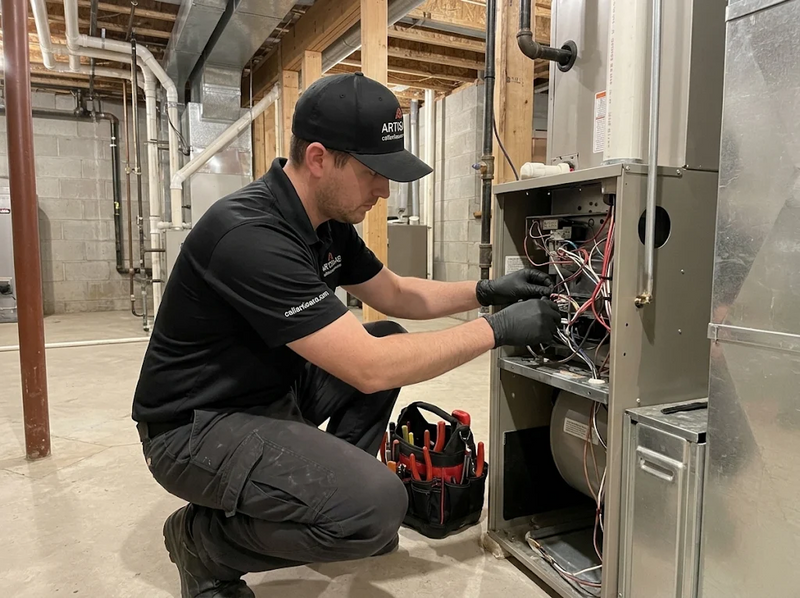
- Ductwork: Technicians will attach the plenums, making sure to seal out air to prevent whistling and maximize overall heating efficiency.
- Flue Pipes: Gluing and routing PVC vent pipes is mandatory to stop a leak of deadly exhaust gas inside the home. The system must blow all exhaust gases out the roof or side of the house.
- Power and Fuel: The HVAC tech will hook up the breaker with proper grounding and attach the gas lines using secure, tightly threaded fittings.
Step 4: Thermostat Integration
The last physical part of the install is installing or calibrating the smart thermostat. The pros will wire the thermostat correctly, sync it with the furnace’s internal control board, and set the parameters for the best energy savings and customized comfort.
5. Post-Install Safety Testing and System Testing
The installation is unfinished when the last screw is driven. Extreme safety checks is what guarantees a safe home.
Fuel Safety
Sniffing for gas is the most critical final test. Technicians will utilize specialized gas detectors to make sure zero gas is leaking from the newly established connections. They will also run a combustion analysis to make sure it vents properly and the flue is drawing air correctly.
Life-Safety Devices
Due to the invisible nature of carbon monoxide, checking the batteries in working carbon monoxide detectors is an important final step. If you are putting a unit in a vintage house, updating these detectors simultaneously with your heating system is strongly advised.
Firing It Up
Before leaving the property, the technician will run the furnace for several minutes to guarantee there are no operational problems or unusual vibrations. They will check the temperature rise and verify static pressure, making sure every room gets warm. Post-installation inspections by the city inspector or lead tech guarantee all protocols were followed.
6. Furnace Maintenance Guide
A successful furnace installation sets the stage, but ongoing, diligent maintenance determines how long it will last. Skipping filter changes will destroy the expensive energy efficiency gains you just purchased.
- Replace Filters Regularly: Clogged or dirty air filters choke the blower motor, forcing the furnace to work harder and consume more energy while ruining the air you breathe. You should plan to swap your filters every 1 to 3 months, based on how often it runs, pet presence, and the MERV rating of the filter.
- Fix Drafts: Ensuring your home is well-insulated, free of window drafts, and that all exposed air ducts is taped up makes life easier on your HVAC unit.
- Call a Pro Once a Year: Never wait for an emergency to call a professional. Book a pro to thoroughly inspect the furnace annually. These routine check-ups identify bad parts and dirty burners before they become $1000 repairs.
Knowing your system is the last step in the process. A top-tier installer will walk you through how the system works, how to operate the thermostat, and simple troubleshooting tips. By investing in a high-quality unit, prioritizing a code-compliant professional installation, and committing to simple routine maintenance, you guarantee your house will be a warm, safe, and highly efficient sanctuary for many years.
For a 24 Hour Furnace Installation Technician in Orefield 18069, you can count on Artisans. We’re available 24/7 for all your 24 Hour Furnace Installation Technician needs: (484) 901-5900