The Definitive Property Owner’s Handbook on Heating System Setup in Today’s Market
Committing to a highly efficient HVAC unit is one of the most crucial investments you can make to your home’s indoor climate, security, and energy efficiency. But, a top-notch installation process is as essential as the build quality of the appliance itself. Utilizing industry best practices during installation boosts heating efficiency, reduces lifetime operational expenses, and keeps your household entirely safe from deadly risks like carbon monoxide buildup.
Trane Furnace Installation Contractor in Breinigsville Pennsylvania
When heating systems are improperly measured, inadequately checked, or improperly installed, they can rapidly transform from a reliable heat source into a severe threat resulting in fires or dangerous gas leaks. Regardless of whether you are replacing an outdated system in a older house or equipping a new construction, this in-depth post covers each important stage of the HVAC setup process so you know what lies ahead.
1. Fixing vs. Replacing: Deciding What’s Best
Before paying for a full furnace installation, it is crucial to evaluate whether your old furnace truly needs replacing. Furnaces do not last forever, but recognizing the ideal timeframe to upgrade can keep money in your pocket in emergency repairs and wasted energy.
You should plan for a full furnace replacement if you notice the following warning signs:
- Equipment Age: The standard, reliable lifespan of a home heating system is typically 15 to 20 years. If your system falls within or is past this timeframe, its moving parts and heat exchangers are probably failing.
- Escalating Energy Bills: If your gas or electric bills are steadily rising despite consistent usage patterns, your furnace is wasting energy and straining to produce the exact same amount of heat.
- Constant Repairs: When the added price of repeated emergency repairs on an outdated system begins to rival the cost of a new system, replacement is the most logical step.
- Dangerous Warning Signs: Foul odors, loud clanking sounds, and any hint of a gas leak means you should contact an expert right away. Dangerous symptoms often require an urgent swap to stop deadly accidents.
2. Picking the Best HVAC Unit for Your Property
Furnaces vary wildly in quality. Modern heating technology has advanced significantly, offering property owners total command over their indoor climate and energy consumption.
Understanding AFUE Ratings
Furnace performance is determined by the Annual Fuel Utilization Efficiency rating. A top AFUE rating means that a larger portion of the gas or electric your furnace consumes is successfully converted into usable heat for your living space rather than venting outside.
- Reduced Utility Costs: High-efficiency furnaces consume less power to heat the home. This translates to substantial financial savings over the life of the furnace, which is highly apparent in states that endure long freezing seasons.
- Environmental Benefits: Choosing a green heating system with a 90+ AFUE score typically emits far less carbon, creating a greener home and helping global climate goals.
Top Furnace Brands for 2026
During the buying process, picking a good brand is paramount. Based on recent market performance and lifespan estimates, here are some of the best choices:
3. Pre-Installation: Setting the Stage
A perfect HVAC setup begins well before the new heating unit arrives in your driveway. Getting ready guarantees the installation goes smoothly and that the new system runs perfectly from day one.
Placement and Sizing
Load calculation is incredibly important in home furnace installation. A furnace that is undersized will never shut off without properly heating your home, while a unit that is oversized will rapid cycle, leading to massive temperature fluctuations, bad air quality, and premature mechanical wear.
You must also decide on the absolute best location for the new unit to guarantee ventilation. Most often, furnaces are securely installed in a basement, HVAC room, or attic space. When selecting the spot, think about how close it is to fuel pipes, electrical outlets, and your home’s main air ducts. The space must be entirely free of clutter and obstructions to allow enough room for maintenance calls and to prevent fire hazards.
Trane Furnace Installation Contractor in Breinigsville Pennsylvania 18031
Electrical Requirements
New HVAC systems demand a standalone power line that remains entirely separate from your home’s appliances. Before beginning the physical installation, an installation pro or contractor must ensure your home’s wiring and switches are fully up-to-date and in pristine condition.
- Considerations for Older Homes: Putting a smart furnace in an older property often requires upgraded wiring to provide adequate, stable power. Old knob and tube wiring can trigger electrical spikes that may destroy a modern heater’s motherboard.
Permits and Legalities
Ignoring city permits can lead to massive city penalties or headaches when it is time to move. A critical preliminary step is to acquire all necessary local permits before starting the job. Sticking to municipal laws, manufacturer instructions, and overarching safety standards like the national building codes protects homeowners and guarantees the legality of heating systems.
4. The Step-by-Step Furnace Installation Process
Understanding exactly what happens on installation day helps you to interrogate the crew and ensure their chosen contractors are not cutting corners.
Step 1: Disconnection and Safe Removal
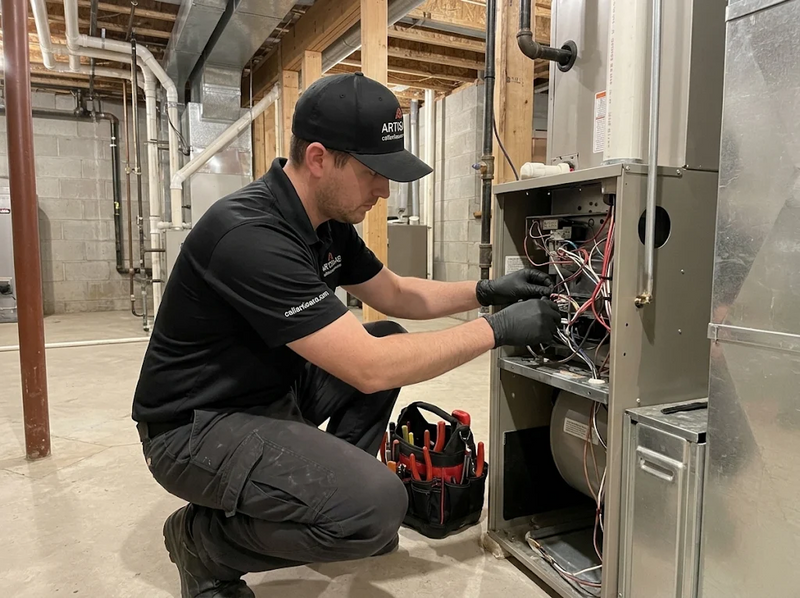
The initial phase requires unhooking and hauling away the old furnace. The crew must guarantee all electrical lines and gas lines are safely shut off before touching the equipment. The HVAC crew will then sweep the floor, removing old metal components and debris to create a pristine, level footprint for the incoming unit.
Step 2: Setting the Furnace
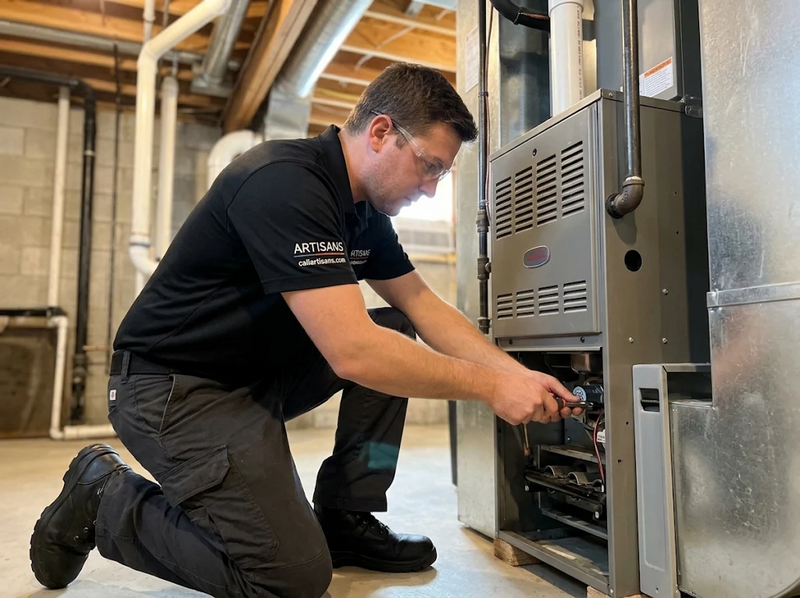
When the space is ready, the new furnace is carried into place. The techs will shim the unit to level the system—which is mandatory for water draining and mechanical operation—and ensure it isn’t touching the walls.
Step 3: Connecting the Infrastructure
This highly technical phase plumbs the standalone furnace to your ducts and pipes:
- Ventilation: Technicians will attach the plenums, working carefully to seal out air to avoid costly air leaks and maximize overall heating efficiency.
- Venting: Correctly sizing and placing chimney liners is the most important step to avoid the trapping of deadly exhaust gas inside the living space. The system must push all exhaust gases safely outside the home.
- Power and Fuel: The HVAC tech will establish secure electrical connections with proper grounding and attach the gas lines using secure, tightly threaded fittings.
Step 4: Wiring the Brain
The final mechanical step is installing or calibrating the home’s thermostat. The pros will connect the R, W, and C wires, pair it to the system motherboard, and program the schedules for the best energy savings and perfect temperatures.
5. Strict Safety Checks and Quality Assurance
The work is not done when the wiring is done. Thorough QA is what separates amateur handymen from professional, certified HVAC technicians.
Fuel Safety
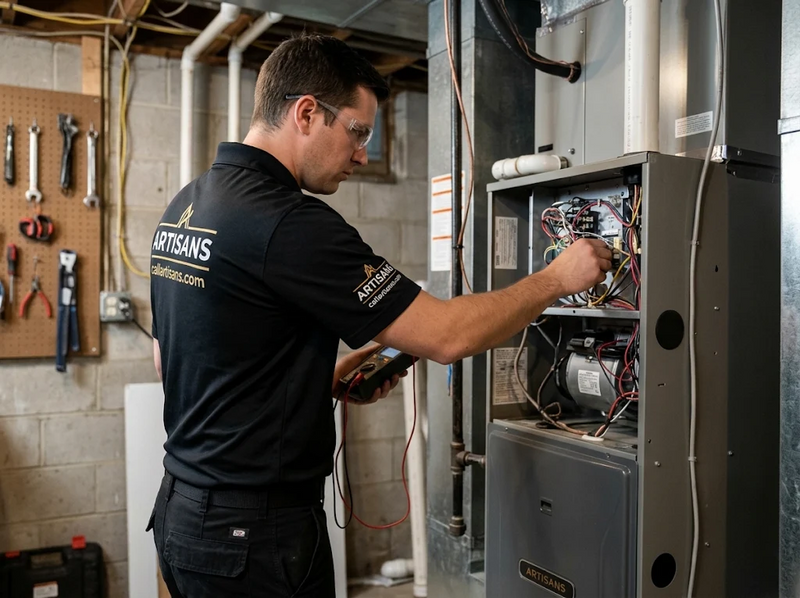
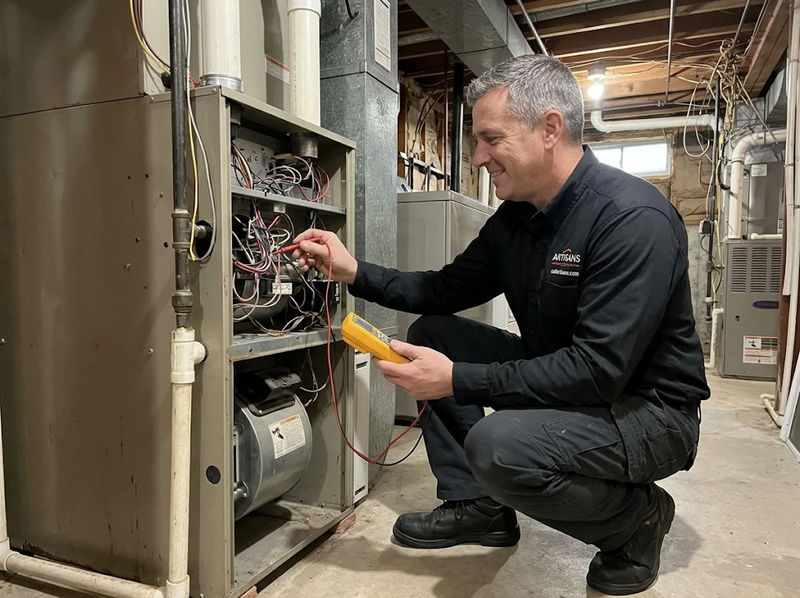
Checking the gas pipe is the most critical final test. Installers will use electronic gas sniffers to make sure zero gas is leaking from the newly established connections. They will also conduct thorough carbon monoxide testing to check for CO spillage and the flue is drawing air correctly.
Carbon Monoxide Detectors
Due to the invisible nature of carbon monoxide, putting up or testing CO alarms is an essential extra safety layer. If you are installing a furnace in an older home, buying new alarms today is basically mandatory.
System Startup and Calibration
Prior to packing up the van, the lead installer will turn on the heat to listen for weird noises or shaking. They will check the temperature rise and verify static pressure, verifying that the home heats evenly and efficiently across all rooms. Post-installation inspections by qualified professionals guarantee all safety measures are correctly implemented.
6. Long-Term Maintenance for Peak Performance
A successful furnace installation sets the stage, but proper care is the key to longevity. Skipping filter changes will destroy the high AFUE ratings you paid for.
- Keep Filters Clean: A filthy filter block the air, causing overheating and consume more energy while ruining the air you breathe. You should replace your filters every 1 to 3 months, based on how often it runs, how many dogs or cats you have, and the specific filter type.
- Seal and Insulate: Adding attic insulation, free of window drafts, and that all exposed air ducts is properly sealed takes the strain off on your new furnace.
- Yearly Tune-Ups: Don’t let it break down on Christmas to hire an HVAC company. Book a pro to thoroughly inspect the furnace annually. These inspections find small problems and failing flame sensors before they become $1000 repairs.
Knowing your system is the final piece of a successful installation. A top-tier installer will teach you about the furnace, how to operate the thermostat, and basic DIY fixes. By investing in a high-quality unit, prioritizing a code-compliant professional installation, and committing to simple routine maintenance, you ensure your home remains a cozy, protected environment for many years.
For a Trane Furnace Installation Contractor in Breinigsville 18031, you can count on Artisans. We’re available 24/7 for all your Trane Furnace Installation Contractor needs: (484) 901-5900